
A real pashmina is the finest grade of cashmere, combed from the soft undercoat of the cashmere goat. For a wedding, the one to wear is a woven, 100% cashmere pashmina in a colour drawn from your outfit. Before you buy, read the fibre line, because most cheap wraps sold as “pashmina” contain no cashmere at all.
Below are seven picks for guests, bridesmaids, mothers of the bride, brides and grooms, then how to tell a real pashmina from a fake, why pashmina is not banned, and how to wear and care for one. For every other fabric, see the best wedding shawls.
Our own piece. The Cervelt wedding shawl on this list is woven for Vivah by Muslin Dhaka and offered through the Vivah Atelier. We say so wherever it appears, and we do not score it.
Affiliate links. The other picks link to Amazon and Etsy. If you choose to buy through these links we may earn a commission, at no extra cost to you. We chose them on fibre, make and buyer reviews, and no brand paid to be included.
Our picks at a glance
- Rarer than pashmina: the Cervelt wedding shawl by Muslin Dhaka, Vivah Atelier. Red deer down, woven by hand in Dhaka, made once.
- Best real pashmina, and best for the bride: Lumusae off-white Himalayan cashmere shawl, Etsy. 100% Chyangra cashmere from Nepal, handwoven in Kathmandu, with duties prepaid to the US and Canada.
- Best heirloom pashmina: Shahkaar natural Zati pashmina, Etsy. Hand-spun and handwoven in Kashmir, undyed, with geographical indication certification.
- Best for the mother of the bride: Paisley Shawls natural cashmere pashmina, Etsy. A large 200 × 100 cm handwoven shawl from Kashmir.
- Best for wedding guests: Maison Nuance burgundy sheer cashmere shawl, Etsy. 100% cashmere, woven so fine it is semi-transparent.
- Best for bridesmaids: Seasons Comfort 100% cashmere pashmina, Amazon. Featherlight Mongolian cashmere in 16 colours, for a matching party.
- Best for the groom: Lumusae grey herringbone cashmere scarf, Etsy. A unisex 100% cashmere herringbone weave that sits well over a sherwani or a suit.
The picks in detail
Each affiliate pick carries a Vivah rating out of 5. It weighs fibre, make, buyer reviews and how well the piece suits a wedding, judged from the listing and its reviews rather than from wearing it. Buyer review figures were taken from Amazon and Etsy on 27 October 2026.
1. The Cervelt wedding shawl by Muslin Dhaka
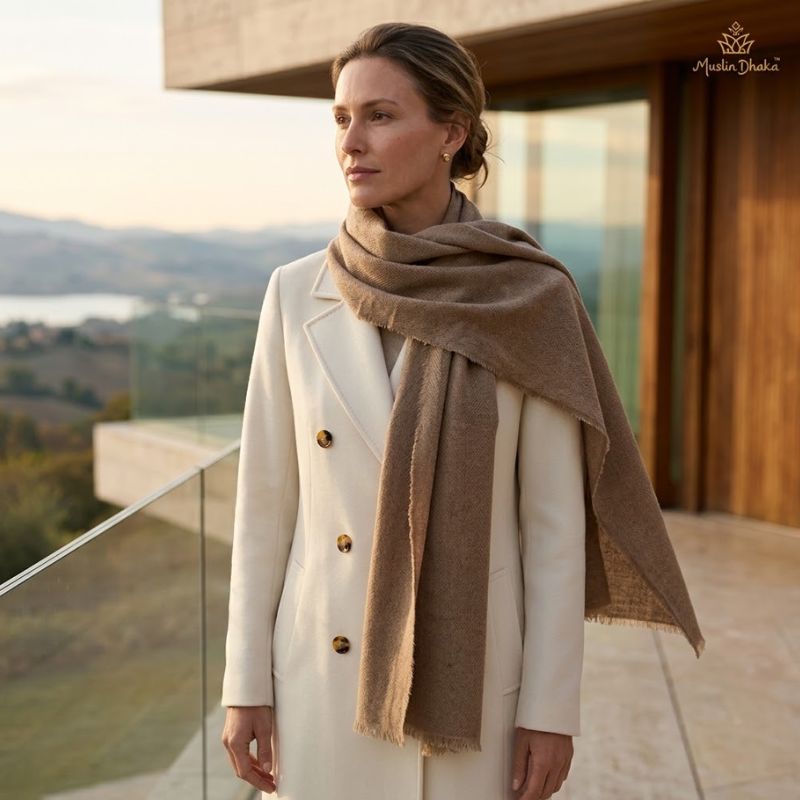
Rarer than pashmina · Vivah Atelier
Pashmina is the finest cashmere. Cervelt is a different fibre altogether, and far rarer.
- Core materials: Cervelt, the fine winter down of farmed New Zealand red deer, separated from the coarse outer hair and spun into yarn. It is not cashmere and not pashmina.
- Defining features: Handwoven on a pit loom in Dhaka, in small, numbered editions. A certificate of authenticity and a QR code are issued in the owner’s name.
- Main benefits: As soft and warm for its weight as a fine pashmina, and owned by very few people. A legal fibre to give and to travel with, unlike shahtoosh.
- Drawback: It is not bought in a click. You request to own it, then agree delivery and timing for your date with the atelier, so start well before the wedding.
- Vivah rating: Not scored. This is our own piece.
2. Lumusae off-white Himalayan cashmere shawl
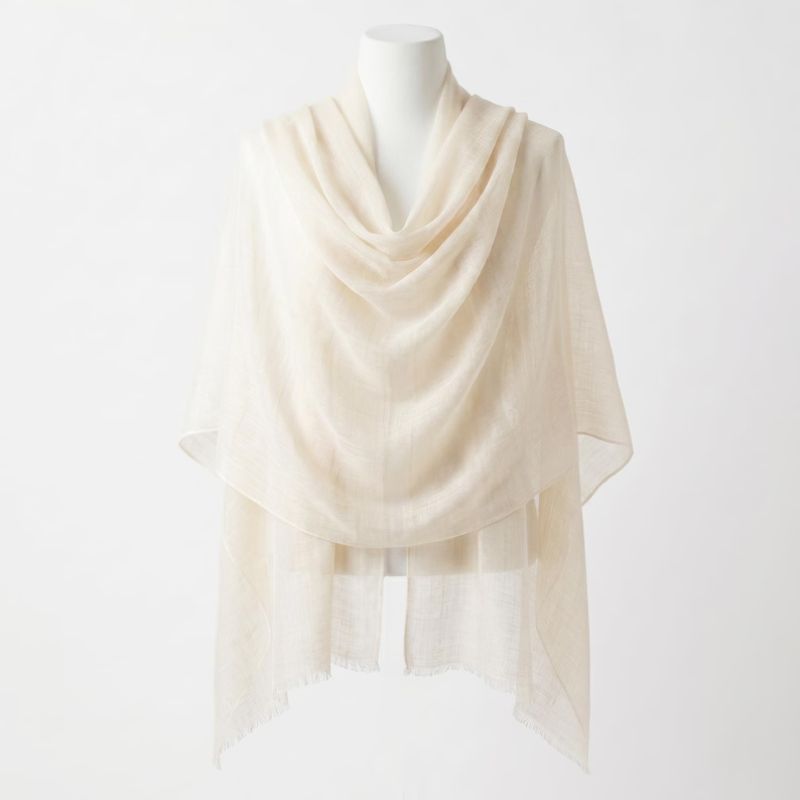
Best real pashmina, and best for the bride · Etsy
- Core materials: 100% Chyangra cashmere. Chyangra is the Himalayan cashmere goat of Nepal, and its fibre is what Nepal sells as pashmina.
- Defining features: About 28 × 76 in. The fibre is combed in the Mustang Himalaya and woven in a partner workshop in Kathmandu. Certified by the Nepal Pashmina Industries Association (NPIA).
- Main benefits: Everything a real pashmina should state is on the listing: the fibre, the animal, where it was combed and where it was woven. Shipped with duties and import taxes prepaid to the US and Canada, so nothing is due on delivery. Returns accepted.
- Drawback: Off-white belongs to the bride. As a guest, choose a colour from your outfit instead.
- Buyer reviews: 4.8 out of 5 from 30 reviews.
- Vivah rating: 4.6 out of 5.
See the Lumusae cashmere shawl on Etsy
3. Shahkaar natural Zati pashmina
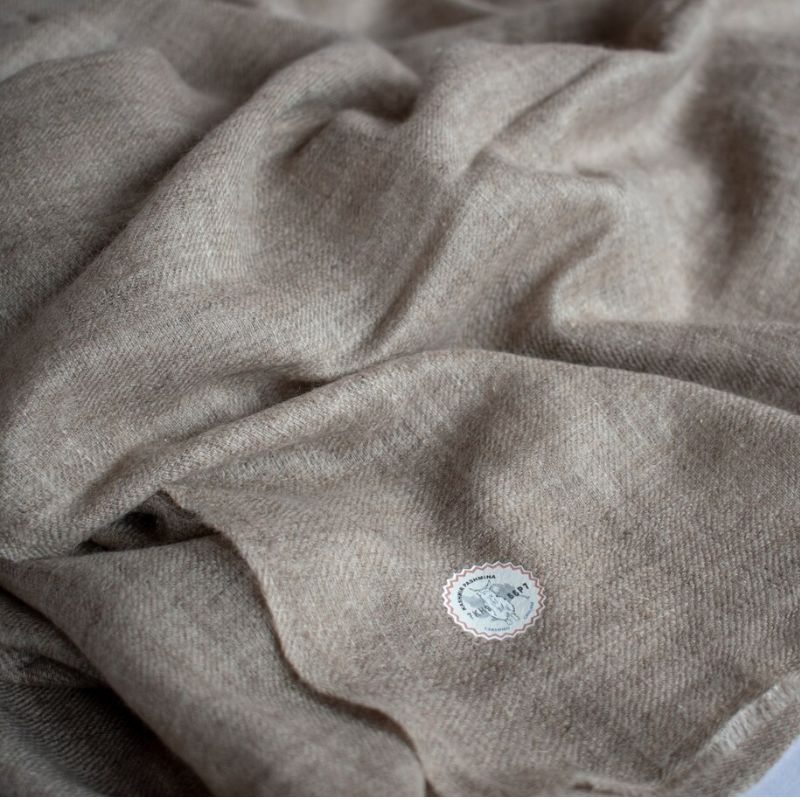
Best heirloom pashmina · Etsy
- Core materials: 100% pashmina, in Zati, the natural beige of undyed fibre.
- Defining features: The yarn is spun by hand by a single artisan, which the maker says takes 35 to 40 days for one piece, then woven on a wooden handloom in Kashmir. GI certified. Dry clean only.
- Main benefits: This is pashmina crafted the traditional way, from hand-spun yarn, with the slightly uneven texture that hand spinning leaves. Undyed fibre suits a bride, a groom, or a gift to be kept.
- Drawback: The listing describes it as a light weave and gives no dimensions in its description, so check the size with the maker before ordering.
- Buyer reviews: 5.0 out of 5 from 26 reviews.
- Vivah rating: 4.7 out of 5.
See the Shahkaar pashmina on Etsy
4. Paisley Shawls natural cashmere pashmina
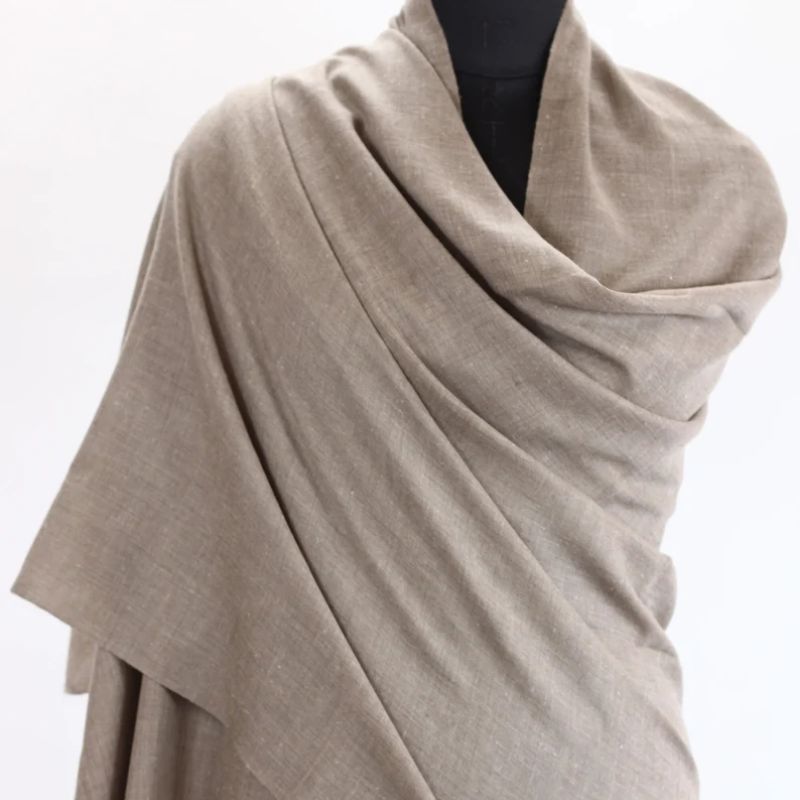
Best for the mother of the bride · Etsy
- Core materials: Genuine pashmina cashmere, handwoven, in its natural undyed colour.
- Defining features: A full shawl size, 200 × 100 cm (about 79 × 39 in). Made in Kashmir. Hand wash or dry clean.
- Main benefits: Twice the width of most stoles, so it wraps fully round the shoulders and back through a long day, which is what a mother of the bride needs from the morning to the late night.
- Drawback: The natural tone is soft and pale. If you want a deep colour beside a jewel-toned outfit, ask the shop for its dyed shades.
- Buyer reviews: 4.8 out of 5 from 46 reviews.
- Vivah rating: 4.5 out of 5.
See the Paisley Shawls pashmina on Etsy
5. Maison Nuance burgundy sheer cashmere shawl
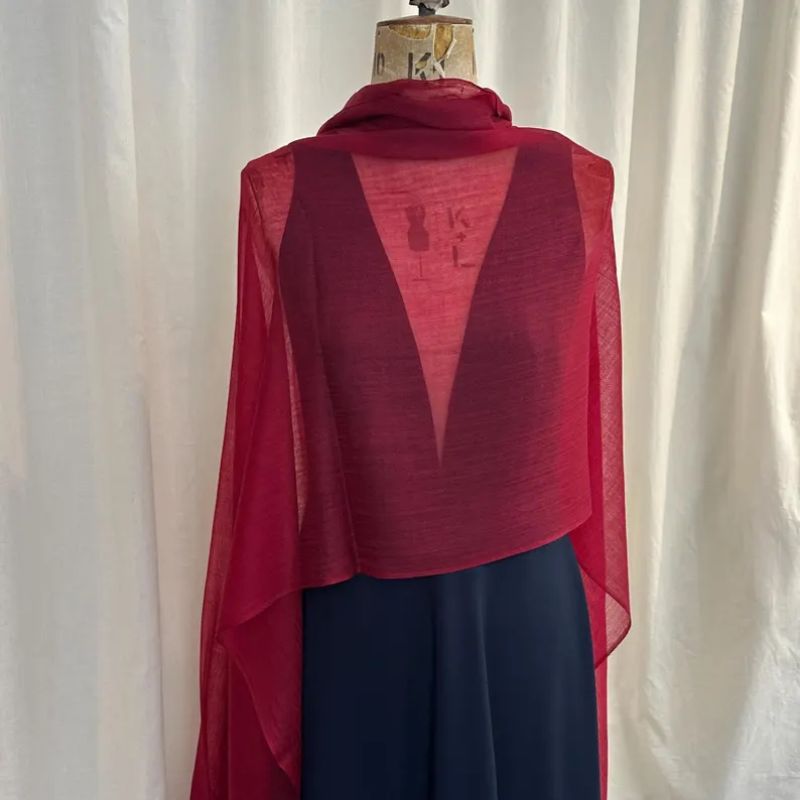
Best for wedding guests · Etsy
- Core materials: 100% cashmere.
- Defining features: 98 × 228 cm (38 × 90 in), woven so finely that it is semi-transparent. Ships from France.
- Main benefits: A sheer weave lets the dress show through, so the shawl adds colour and warmth without hiding the outfit. Burgundy is one of the best guest colours for autumn and winter weddings.
- Drawback: A young shop with only a handful of reviews, and the listing calls it cashmere rather than pashmina. The fibre is what matters, and here it is stated in full.
- Buyer reviews: 5.0 out of 5 from 3 reviews.
- Vivah rating: 4.2 out of 5.
See the Maison Nuance cashmere shawl on Etsy
6. Seasons Comfort 100% cashmere pashmina
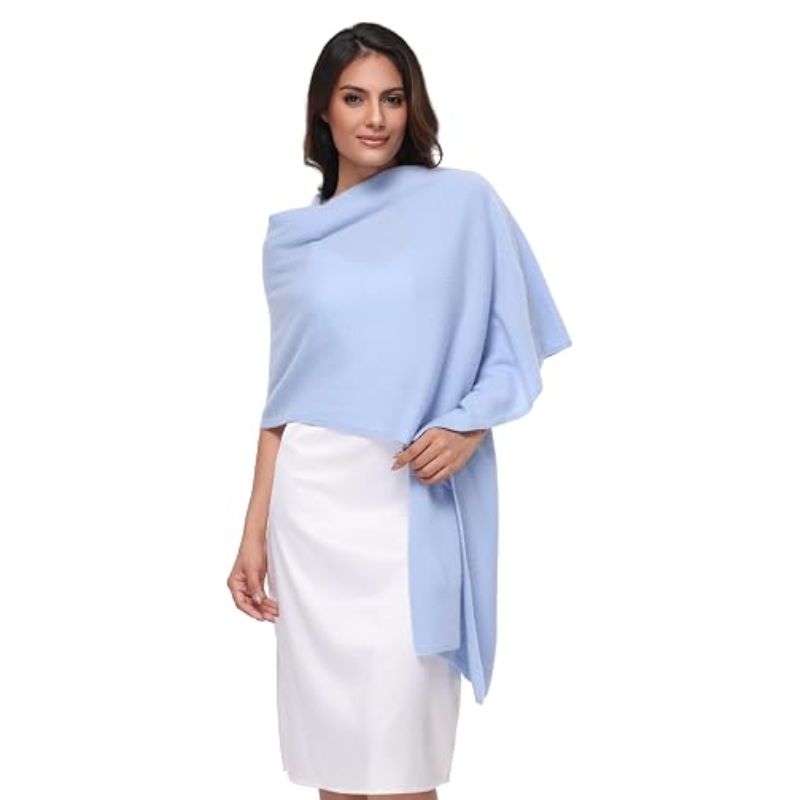
Best for bridesmaids · Amazon
- Core materials: 100% Mongolian cashmere.
- Defining features: A featherlight wrap, 79 × 24 in, in 16 colours. Hand wash or dry clean.
- Main benefits: It states 100% cashmere, which many Amazon pashminas do not, and it comes in enough colours to dress a whole bridal party in one shade. Light enough to carry all day.
- Drawback: Featherlight means less warmth outdoors in winter. For a cold venue, layer it or choose a heavier one.
- Buyer reviews: 4.4 out of 5 from 50 ratings.
- Vivah rating: 4.3 out of 5.
See the Seasons Comfort pashmina on Amazon
7. Lumusae grey herringbone cashmere scarf
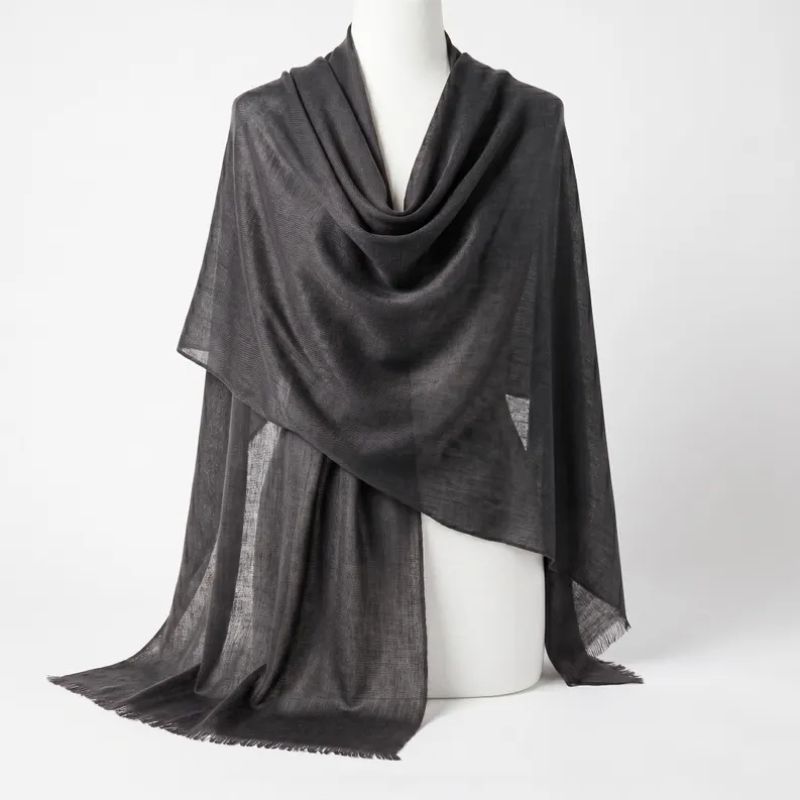
Best for the groom · Etsy
- Core materials: 100% Chyangra cashmere, never blended.
- Defining features: A lightweight herringbone weave in soft grey, handwoven in Kathmandu. NPIA certified. Arrives gift-boxed, with duties prepaid to the US and Canada.
- Main benefits: Herringbone reads as tailoring, so it sits naturally over a sherwani, an achkan or a dark suit. Unisex, so it also suits a father of the bride.
- Drawback: Very few reviews so far, and the size appears only in the listing’s images.
- Buyer reviews: 5.0 out of 5 from 5 reviews.
- Vivah rating: 4.4 out of 5.
See the Lumusae herringbone scarf on Etsy
What pashmina actually is
Pashmina is the finest grade of cashmere. It comes from the soft undercoat that cashmere goats grow in the cold of the high Himalaya, which is combed out by hand in spring, then traditionally spun and woven by hand. The word comes from the Persian for wool, and in Kashmir and Nepal it has long meant the finest of this fibre.
It is not a separate animal, and it is not a separate fibre. Every real pashmina is cashmere. Not every cashmere is pashmina in the traditional sense, because much of the cashmere sold today is machine spun from coarser grades.
What makes a pashmina special is the combination: a very fine fibre, spun gently enough to keep its softness, and woven loosely enough to drape. The result is a shawl that is warm for its weight, light enough to fold into a clutch, and soft against bare shoulders.
For the wider world of cashmere, from featherlight to heavy 2-ply knits, see cashmere wraps for weddings.
How to tell a real pashmina from a fake
Read the fibre line, not the name
In the United States, a product can only be labelled cashmere if the fibre is the fine undercoat of the cashmere goat, averages 19 microns or less, and has no more than 3% by weight of fibres coarser than 30 microns (FTC). That label is your best evidence.
The word “pashmina” on its own has no such protection. It proves nothing. A real pashmina will say 100% cashmere, or for a blend, state its cashmere percentage.
The usual stand-ins
Most wraps sold as pashmina for weddings are viscose, acrylic or polyester. On 27 October 2026, the best-selling “pashmina” wrap in Amazon’s Wraps & Pashminas category listed 50% viscose, 28% polyester and 22% polyamide, with no cashmere at all. It may be a perfectly good wrap, but it is not pashmina.
Watch for “silk pashmina” too. It may be a silk and cashmere blend, or it may be silk alone, or silk and viscose. If no cashmere percentage is given, assume there is none.
Feel, weave and drape
A real pashmina is soft from the first touch, with a faint natural halo rather than a slick shine. It feels warm almost at once in your hands. It drapes and falls close to the body. Synthetics tend to feel cool and smooth, slide off the shoulders, and spark with static.
The ring test and the burn test, and why neither is proof
The ring test, pulling a shawl through a finger ring, shows only that a cloth is fine. Fine viscose passes it too.
The burn test is more telling, but only on a loose fringe thread, never on a shawl you mean to wear. Natural hair smells like burnt hair and turns to a soft ash; synthetics melt into a hard bead and smell of plastic. Even then, it tells you natural or synthetic, not cashmere or wool. The label remains the best evidence you have.
Is pashmina banned?
No. Pashmina is legal to buy, sell, wear and give in the United States and almost everywhere else.
What is banned is shahtoosh, the shawl woven from the down of the Tibetan antelope, or chiru. The animal is killed for its wool. CITES has barred commercial trade in it since 1979, and the US listed the Tibetan antelope as endangered in 2006, which also bans its sale within the country (US Fish and Wildlife Service).
The two are often confused because both are fine Himalayan shawls with a long history as wedding gifts. If shahtoosh is the tradition you want to honour, see legal alternatives to shahtoosh as a wedding gift.
Pashmina for every role at a wedding
Guests
Choose a colour that compliments your outfit, or one shade deeper, and leave white and ivory to the bride. A sheer or featherlight pashmina adds warmth in the evening without hiding the dress. Drape it loosely over both arms for the ceremony and tie it once at the front for the reception.
Bridesmaids
Buy every pashmina from the same listing, in the same order, so the colour matches exactly. A 100% cashmere pashmina also makes a bridesmaid gift that will be worn long after the wedding.
Pashminas are also given as favours to every guest, bought in bulk. At that quantity they are almost always viscose or acrylic blends rather than cashmere, which is fine for a favour as long as the card or box does not call them pashmina if the label says otherwise.
The mother of the bride
She is on her feet from the morning photographs to the last guest leaving, so she needs a larger, warmer piece. A full shawl, around 200 × 100 cm, wraps round the back as well as the shoulders. A deep colour or a natural tone both look right beside the formal outfits of the day.
The bride
An undyed or ivory pashmina is soft enough to sit beside the gown without competing with it. Wear it for the walk between venues and outdoor photographs, then take it off when the room warms. Hold it against the gown in daylight first, because whites vary.
The groom
A pashmina over a sherwani is traditional at South Asian weddings, and a cashmere scarf over a dark suit is just as right at a Western weddings. Choose a plain or herringbone weave in grey, beige, navy or black, and let it hang straight from the shoulders rather than wrapping it.
Pashmina colours for a wedding
- Gold: Rich against deep green, burgundy and navy outfits, and right for South Asian weddings. Keep it to a soft, antique gold rather than a bright metallic.
- Silver: Cool and elegant with grey, blue and lilac dresses, and lovely under evening lights. Choose a soft silver grey, which reads more expensive than a shiny one.
- Burgundy: The best guest colour for autumn and winter. It warms navy, black, ivory and blush outfits alike.
- Navy: Formal over a pale dress, and a strong choice for the groom and his family.
- Black: Sleek over black for an evening wedding, or a crisp contrast over red, emerald or white floral prints. Check that the invitation does not discourage black first.
Is a pashmina warm enough?
A pashmina is warm for its weight. It keeps off the chill of an autumn evening or an air-conditioned hall easily, and a heavier or 2-ply piece will see you through a winter wedding between venues. For a long outdoor wait in real cold, wear it over a coat or choose a heavier wrap.
For a summer wedding, a destination wedding in the heat, or a nikkah in a warm room, pashmina can feel too warm. There, a Dhaka muslin wedding shawl, handspun cotton so fine it breathes like air, is the better choice.
How to wear a pashmina at a wedding
- Over both arms: Let it rest low across your back and over the crook of each arm. The most elegant drape for a ceremony.
- Over one shoulder: Drape it round your shoulders and throw one end over the opposite shoulder, so it crosses behind you and stays put.
- Knotted at the front: Fold it in half lengthways, place it over your shoulders and tie the ends loosely at your chest. Secure for dancing.
A small shawl pin hidden under the fold keeps these in place.
Caring for a pashmina
A light shower will not ruin a pashmina. Shake it gently, then lay it flat to dry away from heat.
Clean it rarely. Hand wash it in cool water with a mild wool or hair shampoo, press out the water in a towel without wringing, and dry it flat. Or take it to a cleaner who handles fine cashmere. Store it folded, never hung, with cedar to keep moths away.
Questions
Can I wear a pashmina to a wedding?
Yes. Guests, bridesmaids, mothers of the bride and brides all wear pashminas to weddings, for warmth, for covered shoulders in a church or mosque, or simply to finish an outfit. Choose the colour from your outfit, leave white and ivory to the bride, and pick a woven, 100% cashmere piece.
Is pashmina the same as cashmere?
Pashmina is the finest grade of cashmere, not a separate fibre or animal. It comes from the soft undercoat of Himalayan cashmere goats. Every real pashmina is cashmere, but the word is often used for wraps that contain no cashmere at all, so always check the label for a cashmere percentage.
How can I tell if a pashmina is real?
Read the fibre line. A real pashmina states 100% cashmere, or the cashmere percentage of a blend. The word “pashmina” alone proves nothing. Softness, warmth in the hand and a close drape are good signs, but the ring test only shows that a cloth is fine, and fine viscose passes it too.
Why are pashmina shawls banned?
They are not. Pashmina is legal. What is banned is shahtoosh, woven from the down of the Tibetan antelope, which is killed for its wool. CITES has barred commercial trade since 1979, and the US listed the antelope as endangered in 2006, banning sale within the country.
Is a pashmina warm enough for a winter wedding?
A pashmina is warm for its weight and fine for moving between car, church and reception. For a winter wedding with time outdoors, choose a heavier or 2-ply piece, or layer it over a coat. Featherlight pashminas are best for indoor and autumn weddings.
Can a pashmina get wet?
A light shower will not ruin it. Shake it gently and let it dry flat, away from radiators and direct heat. To clean it, hand wash it in cool water with a mild wool shampoo and dry it flat, or take it to a cleaner who handles fine cashmere.
What colour pashmina should a wedding guest wear?
Choose a color taken from your outfit, or one shade deeper, so the pashmina finishes the look. Burgundy, navy, soft gold and silver grey all work well. Avoid white and ivory unless the couple asks, and check the invitation before wearing black.
What is the difference between a shawl and a pashmina?
A shawl is a shape; pashmina is a fibre. A shawl is any wide piece of cloth worn over the shoulders, in any fabric. A pashmina shawl is a shawl made from pashmina, the finest grade of cashmere. So a pashmina can be a shawl, a stole or a scarf.
The short answer
For a wedding, choose a woven pashmina that states 100% cashmere, in a colour from your outfit, and check the label before the name. The picks above cover every role at the wedding. And if you want a piece rarer than pashmina, one that very few people anywhere will own, request to own the Cervelt wedding shawl.